
Birkat HaIlanot
Blessing the Trees in the Month of Nissan

Of the seasons of the year, only Spring has its own blessing.
It is first mentioned in The Talmud in the context of blessing to be said over good-smelling plants.
“Rav Yehudah said, One who goes out during the days of Nissan and sees blossoming trees, should say: Blessed is One whose world lacks nothing, who created good beings and good trees which humans can enjoy.”
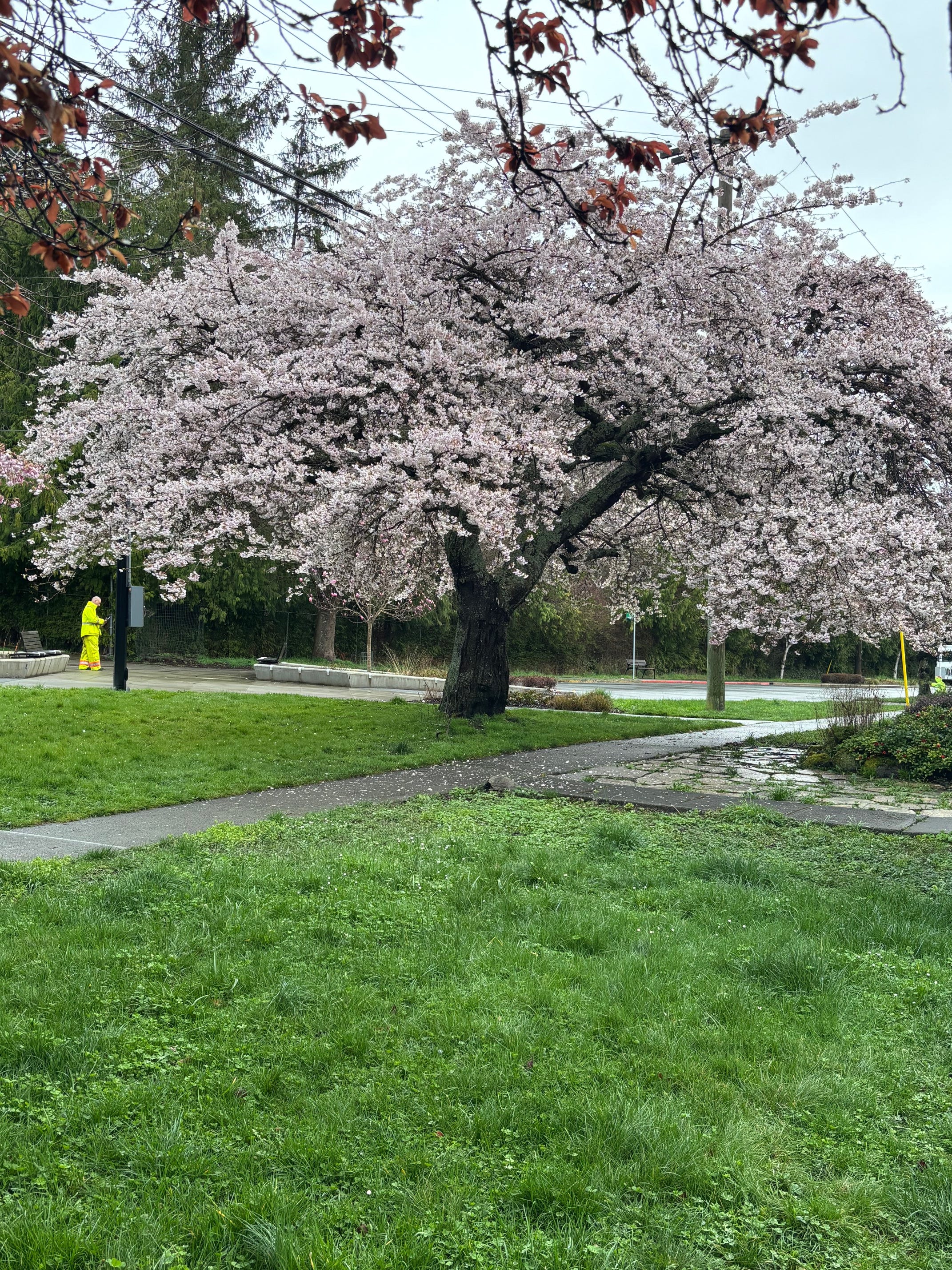
This blessing stands out in the bavli’s discussion as the only blessing that has a time qualification. It also stands in contrast to a similar blessing described later, in another discussion: “If you see good beings, or good trees, say – blessed is the One who created a world like this”. (bavli, Berakhot, 58b) Unlike this latter blessing, Rav Yehudah’s blessing is a response to a specific experience defined both by time, the month of Nissan, and by space, outside. It is a blessing in response to the human experience of Spring, to the experience of walking outside after months of cold and witnessing the blossoming trees coming back to life.
The uniqueness of this blessing was noticed by the later codifiers (the Tur, followed by the Shulhan Arukh) who dedicated a chapter to this blessing (Orah Hayyim, 226), separate from all other groups of blessings. Further highlighting the connection of this blessing to the season, halakhists also debated the application of this practice in climates where Spring and blossoming do not coincide with the Jewish month of Nissan and largely came down on the side of assigning primacy to the experience of Spring over the set Jewish calendar.
There is however a tradition of kabbalists who felt strongly that the blessing should be said during the month of Nissan. An early proponent of this opinion was the Ḥida in the 18th century:
One should make an effort to make the blessing over trees in the month of Nissan. The scrupulous are very strict about saying this blessing only in Nissan, over two trees, and we go out to the fields to say this blessing.
You should say this blessing with intense kavanah, as it serves the rectification of souls incarnated in trees and grass during this time of year, and you should seek compassion for them.
(Hida, Moreh B’etzba, 7:198-199)
The connection between Spring and incarnation goes back to Lurianic kabbalah. One of the fascinating elements of the Lurianic doctrine of gilgul (reincarnation) is that in its original articulations, it is not focused on preservation of individual identity. At the innermost level of identity, our deepest self, we are all part of the cosmic force of life, a cosmic soul – Nishmat Adam HaRishon. Humans, animals, plants and minerals all participate in that soul, and take part in its great drama of restoration and self-perfection. The soul of every individual being is a unique composite of spiritual elements brought together – never to be repeated. Within each individual soul, some elements are those that need work and improvement while others are stronger and well established. Every life has a goal – to strengthen and rectify a specific element for which that particular configuration was created. (Though this may change during one’s life if the original goal has been achieved)
At death, the various elements which made up that soul are dispersed, to be used again in multiple other configurations throughout the universe. The implication of the verse “nothing is ever lost” (Samuel II, 14:14) is that like energy or matter all parts of the soul are preserved. The soul takes on new forms not unlike the body whose material components take on new forms. A life well lived has advanced the universal evolution while in the opposite case it may have impeded that development. In either case the individual form ceases to exist at death.
As noted, the components of any soul (In the Lurianic texts they are called sparks) can wind up in any form of being – human, animal, plant or mineral. This connection of soul and nature, both animates the natural world and subjects the soul to the dynamics of nature. (See Sha’ar HaGilgulim, Hakdamah 22) Souls move between forms when these forms are consumed, so for example, soul-sparks in the grass will become part of an animal or human that eats the plant, and soul-sparks in an animal become part of the human who eats it. The migrations of soul-sparks are seasonal as well – soul-sparks move from plants to living forms only during the Spring and early Summer, the months of Nissan through Tamuz. Somehow, some kabbalists seem to have understood the divine calendar of soul-spark migration as transcending the connection to the actual natural cycles.
It is the author of Sefer Hemdat Yamim (The Month of Nissan, Ch. 1) who first connects the blessing on the blossoming of the trees to the migrations of souls, and who is probably the Hida’s source. As he describes it, the awakening of life force in the Spring draws out the soul-sparks who are ready to commence their journey. Our blessing then, is not said only in appreciation of the tree blossoms, but rather as a way of investing our own energy in the movement of life force throughout the world, which is reinvigorated, once again, with the coming of Spring.
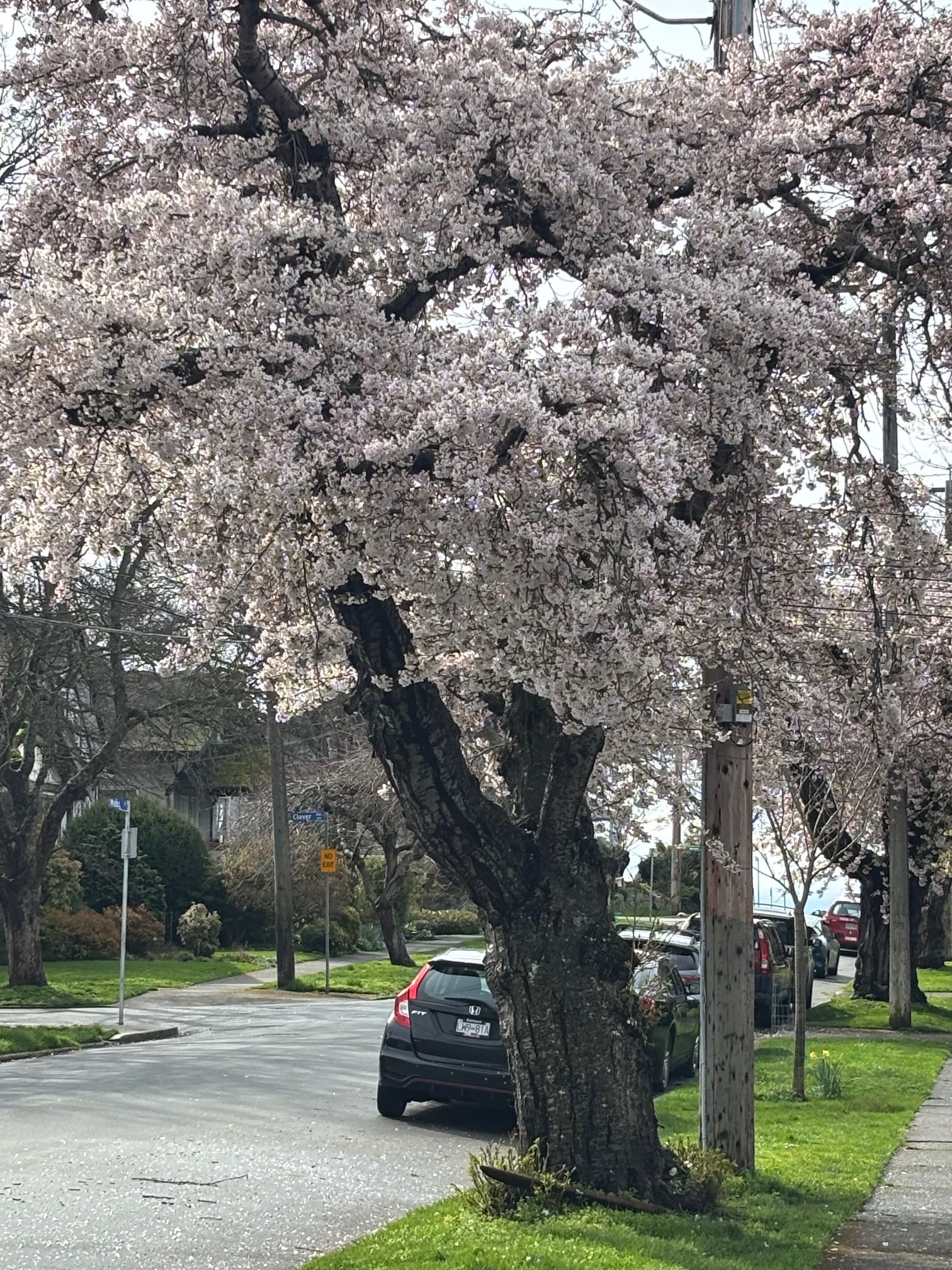
In parashat Koraḥ, tree blossoms become a symbol of divinely chosen leadership. Following the violent repression of Koraḥ’s rebellion, God offers a gentler way to affirm the divine choice of Moshe and Aharon as leaders.
GOD spoke to Moses, saying: Speak to the Israelite people and take from them—from the chieftains of their ancestral houses—one staff for each chieftain of an ancestral house: twelve staffs in all. Inscribe each one’s name on his staff, there being one staff for each head of an ancestral house; also inscribe Aaron’s name on the staff of Levi. Deposit them in the Tent of Meeting before the Pact, where I meet with you. The staff of the man whom I choose shall sprout, and I will rid Myself of the incessant mutterings of the Israelites against you.
Moses spoke thus to the Israelites. Their chieftains gave him a staff for each chieftain of an ancestral house, twelve staffs in all; among these staffs was that of Aaron. Moses deposited the staffs before GOD, in the Tent of the Pact. The next day Moses entered the Tent of the Pact, and there the staff of Aaron of the house of Levi had sprouted: it had brought forth sprouts, produced blossoms, and borne almonds.
R Leibleh Iger, a 19th century Hasidic master, offers the following connection between the symbol of the blossoming staff and Aaron’s personal qualities:
What was the main reason that Aaron was chosen to be the priest? Aaron knew that the blessed One had chosen him to serve in the priesthood. However, he was so humble and unassuming that he had no confidence that he would always be the one chosen for this service. He did not assume that his deeds would merit the role of High-Priest even from one moment to the next. He was forever in a state of longing and hoping that the blessed One’s love would be extended to him in the next moment as well. He lived as if he had never been chosen before. It was clear to him that he was not chosen because he deserved it, but rather because of God‘s desire, and who is to say that God will have that same desire tomorrow, and that he will be granted the strength and the power to continue to serve in the high priesthood?
This is the meaning of the verse: “it shall be the person whom I will choose” (Bamidbar 17:20). This means a person who always hopes that I will choose him in the next moment as well. “His staff will blossom” – the staff is a finished object, a branch that will no longer grow. Blossoming, on the other hand, is the beginning of existence. This is why the blossoms signify Aron’s holiness. Aaron does not treat his holiness like something finished, Rather, it is always new for him. He lives as if he is beginning this service at this moment, as if the service is just now blossoming. This is the meaning of the verse, “the righteous blossoms like a palm tree” (Psalms 92:13).
This is also the reason that Aron was chosen to offer the sacrifices of the Israelite people. The point of the sacrifice (korban) is that a person who feels distant can come close (karov) again. And even though the priest knows their whole history and everything they have done up until this point, despite all this, the priest can connect this person to the possibility of beginning anew in holiness, allowing them to come close to God and the people again. This is the practice of korban (sacrifice). Aaron and his sons can do this because that is how they live their own lives, as we explained before. Of them the verse says: “how lucky is the one you choose and draw close to you” (Psalms 65:5).
(Torat Emet, Parashat Koraḥ)
R Leibleh’s description of Aharon can sound both inspiring and terrifying. He describes Aharon as a person who never relies on past achievements, who has no sense of entitlement, who lives in longing, for whom each moment is blossoming, but never harvesting fruit. In describing Aharon, is R Leibleh thinking of the halakhah (Shulḥan Arukh, OH 226) that once the tree gives fruit, the Spring blessing can no longer be said?
R Leibleh teaches that the radical humility of Aharon is the antidote to the feelings of guilt and shame that can overwhelm us when we are too deeply enmeshed in the past. It is the person who has never relied on the past who can guide you on the path of leaving the past behind and starting over again.
R Leibleh’s teaching brings a cluster of Spring symbols together. The Mishkan which is dedicated on the first day of Nissan is the place where the person who cannot free themselves from the yoke of the past comes, to meet the person who allows every moment to blossom, so that hey can learn from that person to be like the trees who blossom in the Spring, leaving the cold and darkness of winter behind.
May we all merit new beginnings.
Thank you for this Ebn. I love the weaving of the Nisan blessing with the gilgulim Torah and Aharon/new beginnings. Just beautiful.
Thank you for the beautiful post and the pictures! Some winters are mild and mellow, but this one has chewed up so much energy and hope that the spring blessing seems ever more fitting.