
More Post-Holiday Reflections
Halloween and Yizkor

Halloween on Friday evening was an opportunity to go a little deeper into the popular holiday on the way to Shul with my 10-year-old, who wanted to know if kids ever carried through with the threat of “tricks”.
After responding to the specifics of the question, I pointed out that what is commonly celebrated as Halloween is derived from a mixture of traditions, amongst them the idea that on this night the gateways between the worlds of the living and the dead are open. In this context, costumed children threatening tricks or treats, enact an old fear that the spirits of the dead will harm the living unless they are placated in some way.
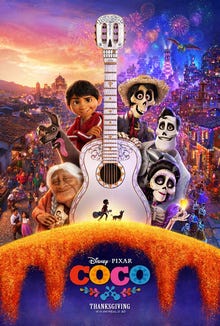
I mentioned that Dia de los Muertos is based on the same premise, and my daughter noted that while in the tradition of Dia de los Muertos the souls crossing over are our friends, that seems not to be the case with Halloween. (My kids are familiar with the tradition of Dia de los Muertos primarily through the Pixar/Disney film Coco (2017). For those who missed it because they did not have children of the right age, or any other reason, I highly recommend watching the movie. It is without question one of the deepest reflections on memory and love that I have seen on screen in at least a decade)
The idea that all kinds of horror lurk just behind the veil of death and threaten the living, is of course no more than an illustration of the crippling and unhealthy fear of death that has become prevalent in our society, and I am glad that my children have been exposed to other cultural and psychological alternatives.
At which point, I cannot help but point out that the Jewish tradition also knows of times that the gateways between the living and the dead are open, and among them is Yom Kippur, this particular experience anchored in the ritual of “Yizkor”.
“Yizkor”, a communal ritual memorializing the dead, begins in Ashkenaz following the massacres and destruction of Jewish communities that came with the first crusade. For a long time it was dedicated to the martyrs of these massacres and was practiced on two shabbatot associated with these tragedies- the shabbatot before Shavuot and before Tish’a b’Av. Over generations, important rabbis and donors were also added to the list of those memorialized, and eventually the need developed for a version of the ritual that would include people who did not belong to any of the above-mentioned groups.
(For Hebrew readers, an excellent account of the halakhic history of Yizkor can be found in שמואל גליק, אור לאבל עמ’ 133-144)
Gradually, between the 12th and 14th centuries, Yizkor is introduced to the services of Yom Kippur as a response to that need. Mahzor Vitri (12th century, a foundational text for Ashkenazi liturgy) explains evoking the presence of the dead on Yom Kippur as follows:
And we pledge charity publicly for the merit of the living and the dead. Throughout all Ashkenaz, this is the only day that charity is pledged for the merit of the dead. The reason charity is pledged for the merit of the dead on Yom Kippur, is that it is a day of atonement and forgiveness, and they too need atonement and forgiveness.
(Mahzor Vitri, Yom Kippur, 353)
The Hebrew versions of all the texts quoted in this post, can be found here.
Yom Kippur is here conceptualized as a day in which the living and the dead come together in search of atonement. The practice of pledging charity is based on the idea that those who dwell in the world of the living can support the dead with their actions. This is made explicit in a teaching printed in Midrash Tanhuma, but is considered a late insertion into the book:
It says in Torat Kohanim (Sifrei, Devarim 21:8): “Atone for Your people Israel”- refers to the living, “which you have redeemed” – refers to the dead. This teaches that the living can redeem the dead. This is why we mention the dead on Yom Kippur, and pledge charity for their merit. We learn in Torat Kohanim – “You might think that once they are dead charity no longer benefits them. This is why the verse says – “which you have redeemed” when you pledge charity for their merit, they are immediately taken out of purgatory and rise up like an arrow from a bow…
This is new (material), from here onwards it is old.
(Midrash Tanhuma, Ha’azinu, 1:1)
The benefit however is not one sided. We also assume that the dead can help the living as is demonstrated in the ancient practice, to go pray in cemeteries in times of trouble. The Maharal (R’ Yehudah Lowe of Prague, 16th century) describes the dynamic as follows:
Regarding the teaching in Bavli, Ta’anit (16a) that when the rabbis ordered fasts (in response to troubles) they would go to the cemetery so that the dead would pray that we be treated with compassion. It is not that we ask the dead to pray for us. Rather, we go to the cemetery to connect with the dead, so that they too will feel connected to the living and seek compassion for the people of Israel. For the dead too are of Israel, and out of love for the people of Israel they ask for compassion for us.
(Maharal, Netivot Olam, Netiv HaAvodah 12)
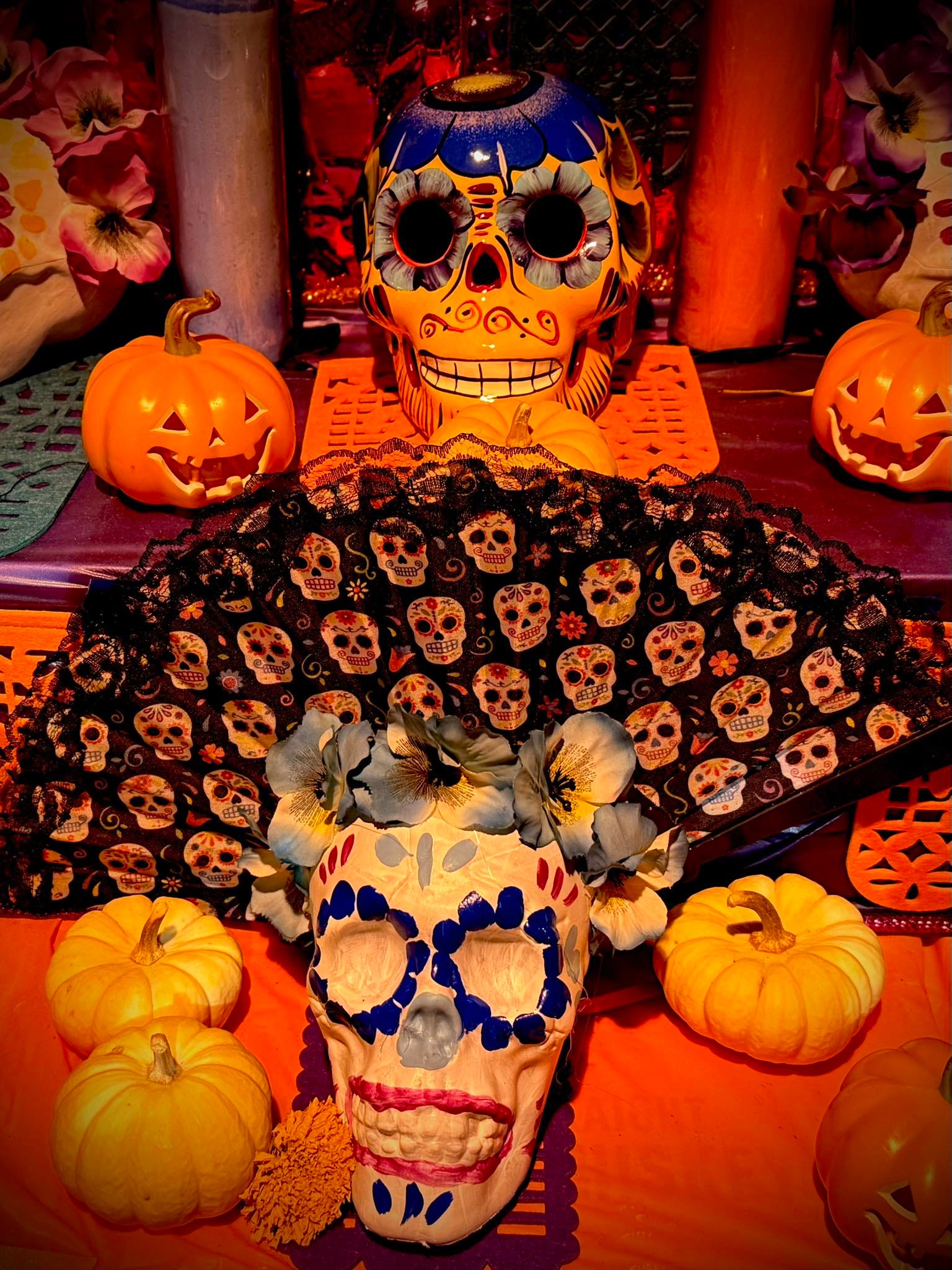
Many people are familiar with the idea of Yom Kippur expanding the boundaries of community as expressed in the Kol Nidrei liturgy that expands our prayer community to include sinners. Yizkor on Yom Kippur is also an expansion of community, as we stand amidst a loving gathering of our ancestors and all of us pray for each other. Unlike Halloween (but perhaps more similar to Dia de los Muertos) Yom Kippur teaches that when the boundaries between the living and the dead collapse it is a day of mutual care and love, and as the Mishnah taught, one of the best days of the year. If Halloween comes from traditions reflecting the fear of death, Yom Kippur reflects the possibility to incorporate death into our lives with love, and celebrate, own, and be responsible for being a link in the ever moving and changing flow of being.
I wonder if this kind of awareness was not partially behind the east-European move to add Yizkor to the pilgrimage festivals as well (on the last day of Pesah, Shavu’ot and Sukkot). This happened later than the 16th century (none of the 16th century codes mention it, while they do mention Yom Kippur) and caused some consternation among halakhists who were hard pushed to justify a practice that seemed to evoke mourning in the midst of joyous holidays.
Rabbi Tzvi Hirsch Kaidanover (17th century, Vilna) the author of Kav HaYashar offered a beautiful image for this practice, seemingly connected to the Yom Kippur insight.
I have also heard a fitting explanation as to why the custom in Poland is to remember the souls of the deceased on the last day of the holidays. One of the ten miracles that occurred regularly in the Holy Temple was that three times a year the entire nation was able to enter it, on the festival of Matzos, the festival of Shavuot and the festival of Sukkot. And although the people were crowded together standing, there was room for everyone to prostrate (Avot 5:5), a situation that flew in the face of natural law. This is because on each festival the souls of Avraham, Yitzchak and Yaakov used to visit the heavenly Temple together with the souls of all the righteous. At that time the [structures of the] earthly Temple would move aside and the heavenly Temple [with all the souls in it] would descend to earth to take its place. And since the heavenly Temple was a spiritual edifice, it could contain all of Israel [the living as well as the dead]. And now that the Holy Temple has been destroyed, on account of our sins, we evoke the souls of our holy ancestors on every festival so that their merits will stand by us and our offspring forever, Amen. — Based on the words of my teacher and mentor, Rabbi Yosef, z”l (Yesod Yosef, Chapter 87).
(Kav HaYashar, chapter 86, slightly emended Sefaria translation)
If we can be in community with our ancestors to help each other, certainly we can join to celebrate each other… And if we all used to be together in the temple courtyards, certainly the supernal temple can also descend to our synagogue, or even our table, so that we can all celebrate together. Or at least we can long for that…
In many of our congregations Yizkor of Yom Kippur seems to have become mostly part of the threat of mortality, used to inspire people towards change (who by fire, etc.) I wonder if it would be possible to focus more on the celebration of ongoing community through the generations.
nice connections and I'm inspired to do see the Disney/Pixar film not - thanks!